




One of the many challenges facing facility managers is the cost of maintaining facilities that weren’t meant to last.
In institutional facilities like hospitals, residence halls, and correctional centers, restrooms are some of the most high-traffic areas in the building. They require thorough, frequent maintenance, including cleaning, sanitizing, repairs, and all too frequently - replacement. The combination of heavy physical use and harsh chemicals can shorten the lifespan of building materials in these areas, as can vandalism or intentional damage, which is a risk in some settings.
Even so, many purchasing decisions are based primarily on upfront costs. Common restroom surface materials are cheap to buy and relatively inexpensive to install but cost much more to maintain and replace over time.
If your maintenance budget is eroding too quickly, it’s a sign that long-term operational costs need to be a higher priority when selecting materials.
Low Upfront Costs but Higher Maintenance Costs
Tile and grout are commonly specified for institutional bathroom surfaces. The price per square foot looks reasonable, at least at first glance. But upfront costs don’t account for the price to maintain tile to a safe and hygienic standard.
Even with proper maintenance, tile surfaces frequently develop:
-
Chips, cracks
-
Water intrusion behind failed grout
-
Loose tiles
- Mold and bacterial growth
That means your maintenance team must perform:
-
Weekly grout scrubbing
- Regular sealing
-
Regrouting, which could be necessary just a few years after installation
-
Tile repair and replacement
In addition, the liability risk for bodily injury due to cracked or broken tile is a real concern.
Fiberglass surrounds are another low-cost bathroom surface often specified for institutional bathrooms. These surfaces seem like a sensible alternative to grout, but due to their lightweight construction and thin gel surface coating, fiberglass surrounds have challenges of their own, especially in high-volume settings:
-
Even shorter lifespan than tile and grout
-
Vulnerable to cracks and damage with heavy use
-
Prone to wear, staining and fading
-
Hollow construction makes repairs difficult
These challenges require:
-
Non-abrasive cleaning products
-
Specialized cleaning protocols and training
-
Frequent replacement
-
Excessive downtime for maintenance
Primary Drivers Affecting Maintenance Budgets
In institutional settings, restroom maintenance budgets are quickly consumed by a few key cost drivers
Cleaning: Materials that require specialty products, tools or techniques drive up the cost of the supplies and equipment required to clean them. More importantly, it can have an outsized effect on labor costs because of the additional staff hours required.
Repairs: These costs are less predictable, but just as important. Cracked tile or fiberglass is a physical hazard and a legal liability, and repairing these surfaces requires either in-house labor or contracted repairs.
Downtime: Repairs can often require removing and replacing entire sections of bathroom surfaces, putting the facility out of commission until fixes are complete. Losing access to restroom facilities creates operational strain, not to mention a poor user experience for residents or guests.
Hygiene: Equally as critical are sanitation concerns, which can cause compliance issues in some settings, such as healthcare. Cracked surfaces or grout lines can harbor mold, mildew, and bacteria, posing a health risk.
How Solid Surface Changes the Equation for Institutions
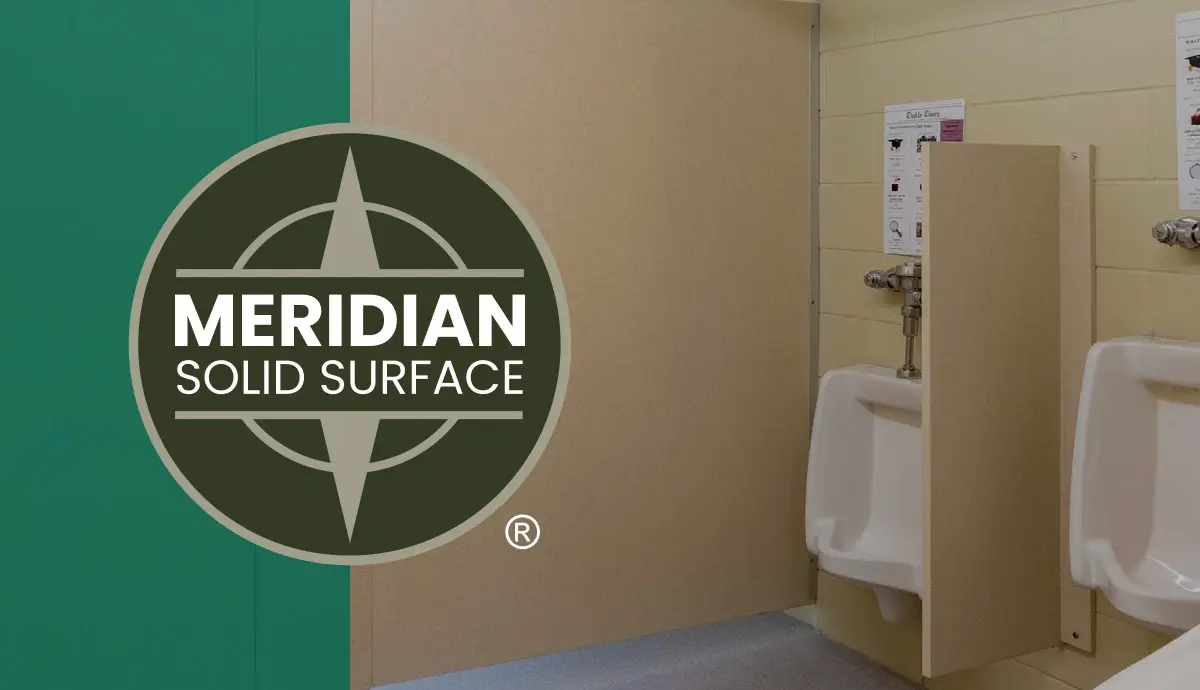
Solid surface bathroom materials like Meridian Solid Surface® are engineered to specifically address the failure points of other bathroom surfaces.
-
Nonporous: As the name suggests, solid surface is nonporous and cannot absorb moisture. That means there’s no risk of water intrusion, failing grout or hidden damage.
-
Chemical- and impact-resistant: Meridian Solid Surface® needs no specialty cleaning products, easily withstanding everyday cleansers. It also holds up better to heavy daily use, resisting the wear and tear that other surfaces show early in their lifecycle.
-
Renewable and repairable: The construction of solid surface materials means they can be sanded down evenly when wear occurs, and the durability and aesthetics aren’t compromised. Scratches or scruffs can be repaired quickly, not after weeks of schedule conflicts, contractor mobilization, materials procurement or downtime.
-
Extensive service life: Solid surface installations in institutional settings outperform tile and fiberglass, offering a significantly longer service life that extends the replacement schedule, costing far less in the long run.
Why Lifecycle Cost Is the Right Metric for Finding Cost Savings
Lifecycle cost analysis is increasingly the standard for materials specification. Upfront costs address one point in time: the time of purchase. They don’t reflect the following 10 or 20 years of cleaning, maintenance, and repairs.
Lifecycle cost, however, provides a clearer picture of the true price of a particular material. A material that costs more at installation, but requires less in maintenance, cleaning, repairs, and downtime, will consistently outperform a cheap material with high ongoing costs.
Solid surface restroom materials are the favorable solution for institutional facilities budgets. They reduce maintenance labor, eliminate grout-related failures and provide a more sanitary, hygienic environment. Plus, their longer lifecycle and minimal repair requirements extend the savings even further.
Emergency repairs and downtime are significantly reduced while cleaning protocols are simplified. Together, these factors create a more stable and predictable operational budget for institutional facility managers.
A Specification Decision That Can Make a Big Impact
The materials you specify during a renovation or new construction project can have a lasting impact on your facility, defining the maintenance profile for 10 years or more. By specifying low-maintenance, durable materials engineered for institutional demand, like Meridian Solid Surface®, you can gain incredible leverage over your long-term operational budget. For institutional facilities, the cost savings of choosing low-maintenance bathroom materials is a direct result of manageable maintenance and predictable costs.
At Tower Industries, we work with facility managers, architects and specifiers to identify the best materials for institutional needs of any scale, whether it’s a single-building reno or a campus-wide upgrade.
Ready to evaluate solid surface for your next project? Request a project quote and connect with our team.
Comments