



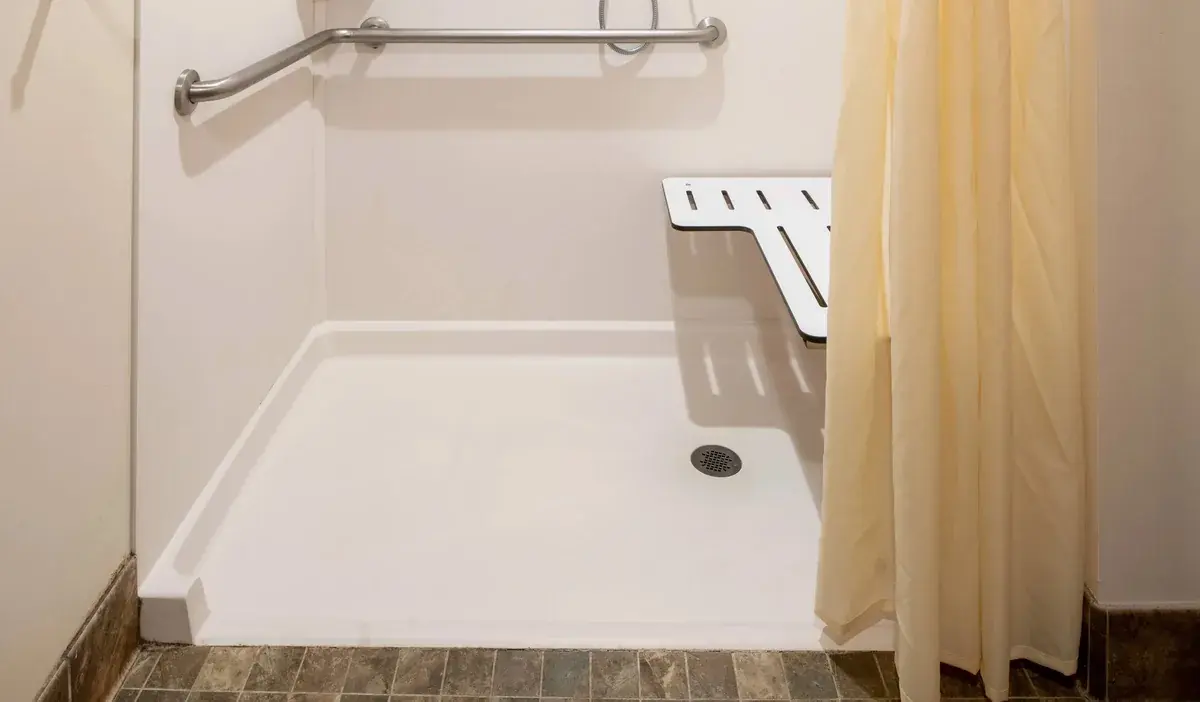
Planning a commercial shower project or renovation requires more than selecting finishes and layouts. In regulated, high-traffic environments, early decisions influence durability, compliance, maintenance demands and lifecycle costs. Whether the project involves healthcare facilities, residence halls, correctional facilities, military housing or other institutional buildings, thoughtful early coordination reduces risks and costly revisions later.
This practical commercial shower project checklist is designed to support institutional shower planning, helping to ensure important factors are considered from the start.
Establish Facility Requirements and User Needs
First, it’s important to gain a clear understanding of how the space will be used and the operational conditions it must withstand. Performance requirements vary by user population and regulatory environment. Healthcare facilities may prioritize infection control and aggressive cleaning regimens, while correctional environments often emphasize durability and tamper resistance.
Define expected occupancy levels, peak usage periods and whether showers will serve individual users or shared groups. Then outline core performance criteria:
- Resistance to impact and surface wear
- Reliable drainage and moisture performance
- Ease of repair or surface restoration
- Expected service life
Together, these factors guide material selection and facility shower renovation planning while supporting lifecycle performance and reducing operational risk.
Plan for Accessibility and Code Compliance
Compliance should be integrated into early design discussions. Institutional facilities often require accessible configurations that align with ADA guidelines and ANSI A117.1 standards. Early planning should address:
- Clear floor space requirements
- Roll-in shower configurations
- Threshold limitations
- Proper slope toward drains
- Reinforcement for grab bars and accessories
Even when not required in every unit, designing adaptable spaces can extend facility usability. Structural backing and flexible layouts support future modifications without complete renovation.
Proactive compliance planning strengthens institutional shower planning and facility management goals.
Address Maintenance and Infection Control Early
Operational teams live with the results of material and system decisions long after installation. Maintenance demands, cleaning frequency and risk exposure should be evaluated during planning, especially in healthcare and other regulated environments where sanitation standards are strict.
Look for surfaces that:
- Withstand frequent cleaning with strong disinfectants
- Are easy to clean with smooth surfaces and minimal separation points that are difficult to sanitize
- Limit areas where bacteria can accumulate
- Prevent water infiltration that can lead to hidden deterioration, structural damage and unexpected repair costs
Establish Budget and Lifecycle Cost Expectations
Commercial shower planning should evaluate more than the initial material cost. Be sure to factor in the total cost of ownership and installation.
Balance Initial Budget with Long-Term Value
Lower upfront material costs can lead to higher maintenance expenses over time. Grout deterioration, tile replacement and recurring repairs can significantly increase lifecycle costs in high-use facilities.
When developing a commercial bathroom planning guide for your project team, account for:
- Anticipated maintenance frequency
- Labor required for repairs
- Downtime during renovations
- Surface refinishing capabilities
- Replacement cycle expectations
Materials that maintain structural integrity and appearance reduce disruptions and extend renovation cycles.
Consider Fabrication and Installation Efficiency
Installation complexity affects both schedule and budget. Multi-component tile assemblies require coordination across several trades, increasing variability in field conditions.
Prefabricated wall panel systems manufactured with consistent dimensions can reduce installation time and help limit on-site adjustments. Evaluating fabrication methods early supports accurate budgeting and scheduling.
Material Selection
With requirements and budget defined, the next step in institutional shower planning is selecting the right material. Proper selection plays a central role in performance, maintenance and compliance.
Evaluate Common Material Categories
Institutional shower projects typically evaluate several material options:
- Tile and grout systems
- Fiberglass units
- Solid surface wall panels
Tile offers design flexibility but introduces grout lines that require ongoing maintenance. Fiberglass units may reduce seams but can be susceptible to cracking or limited customization. Solid surface materials provide a balance of durability, seamless installation and consistent serviceability.
Why Solid Surface Performs in Commercial Shower Settings
Solid surface materials are non-porous and can be fabricated into large wall panels with minimal seams. This reduces potential moisture intrusion points and simplifies cleaning procedures.
Meridian Solid Surface®, manufactured by Tower Industries, is engineered for demanding institutional environments. Because it is manufactured under controlled conditions, panel consistency and dimensional accuracy support predictable installation outcomes. The material’s impact resistance and repairable surface help extend service life in high-traffic applications.
When developing a commercial shower project checklist, consider material durability in relation to installation method and ongoing maintenance requirements.
Evaluating Shower System Manufacturers
Material performance is only part of the equation. The capabilities of the manufacturer directly influence quality, documentation accuracy and schedule reliability.
When evaluating a manufacturer during institutional shower planning, consider:
- Experience with institutional or regulated environments
- Consistency of manufacturing processes and quality standards
- Availability of technical documentation and specification support
- Ability to coordinate custom dimensions and project-specific requirements
- Clarity around lead times and production scheduling
Selecting a manufacturer that understands the demands of shower systems for institutional buildings can reduce uncertainty during fabrication and installation. Early coordination also helps prevent specification gaps that may lead to change orders or delays.
Align Manufacturing, Lead Times and Project Schedule
Custom dimensions, drain locations and accessory cutouts influence production schedules. Engaging with the manufacturer early allows project teams to align fabrication timelines with overall construction milestones.
Prefabricated panels manufactured to project specifications can reduce field measurements and adjustments. Clear installation documentation and coordinated shop drawings improve communication among trades.
Incorporating manufacturing coordination into your commercial shower project checklist improves schedule predictability and limits rework.
Use a Structured Commercial Shower Project Checklist
Before finalizing specifications, confirm the following:
- Facility type and traffic levels are clearly defined
- Core performance criteria documented
- Accessibility and regulatory requirements integrated
- Maintenance and infection control considerations addressed
- Budget and lifecycle cost expectations aligned
- Material category selected
- Manufacturer evaluated for capability and documentation support
- Manufacturing lead times and production coordination confirmed
This structured approach to institutional shower planning supports informed decisions and reduces costly revisions.
Partner Early for Stronger Project Outcomes
Commercial shower projects benefit from early collaboration with manufacturers. Reviewing specifications during the planning phase helps to ensure alignment between design intent and fabrication capabilities.
Meridian Solid Surface® shower systems for institutional buildings manufactured by Tower Industries are designed to support durability, compliance and predictable installation. As a manufacturer focused on institutional applications, Tower Industries maintains controlled production standards, detailed documentation and specification support tailored to regulated environments. By engaging Tower Industries early, project teams gain access to technical documentation and product specifications that simplify planning for facility shower renovations.
Comments