




University bathrooms withstand some of the toughest conditions of any commercial facilities. From residence halls and recreation centers to academic buildings and student unions, these spaces endure constant traffic and heavy use. Understanding the most commonly used institutional bathroom materials can help universities make smarter decisions that reduce labor, downtime and total lifecycle cost.
Real Challenges of University Bathroom Environments
University bathroom environments present unique challenges that differ from most commercial spaces.
- Constant high-traffic use: Relentless activity increases wear and tear while making it difficult to schedule downtime for maintenance and repairs.
- Vandalism: Campus bathrooms are exposed to misuse and vandalism at higher rates than many other facilities.
- Extreme wear and tear: Materials must stand up to impacts, heavy loads and frequent contact with cleaning tools and chemicals.
Where Many University Facility Bathroom Materials Fall Short
Many traditional bathroom materials struggle to meet these challenges. Tile and grout systems, for instance, require ongoing maintenance to prevent staining, cracking and moisture penetration. As grout deteriorates, water can migrate behind walls, increasing repair scope and cost.
Fiberglass surrounds may offer a lower upfront price, but they often lack the durability needed for institutional use. Cracking, surface wear and limited repair options can result in frequent replacements and inconsistent appearance across campus facilities.
In place of these common materials, facility teams need low-maintenance restroom solutions that stand up to the realities of college life.
The Solid Surface Solution
One of the best low-maintenance restroom solutions is solid surface, such as Meridian Solid Surface® manufactured by Tower Industries. This material addresses many of the challenges associated with traditional bathroom materials, so it is well-suited for higher education facilities.
Seamless and Non-Porous Surfaces
Seams, grout lines and joints are often the first points of failure in university bathrooms, trapping moisture, harboring bacteria and requiring ongoing attention to maintain cleanliness. Solid surface is a non-porous, seamless material that limits water intrusion and simplifies daily cleaning, helping bathrooms maintain a cleaner appearance with less effort.
Impact and Tamper Resistance
University bathrooms must be able to withstand accidental and intentional damage. Materials that crack, chip or delaminate under impact require frequent repairs and create safety concerns. Solid surface resists tampering and heavy use for better performance in shared student environments.
Repairability Over Replacement
Even the most durable materials will eventually show wear. Solid surface allows localized repairs without removing entire sections. This is critical in active campus buildings where downtime and costs must be kept low.
Solid Surface Applications in University Bathrooms
Solid surface bathroom materials perform well across a wide range of university spaces, including residence halls, recreation and athletic facilities, academic buildings and student unions.
Shower Walls, Surrounds and Bases
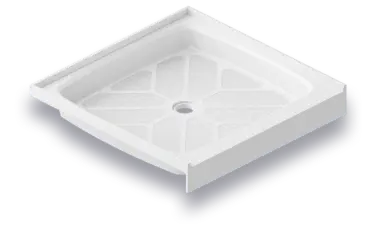
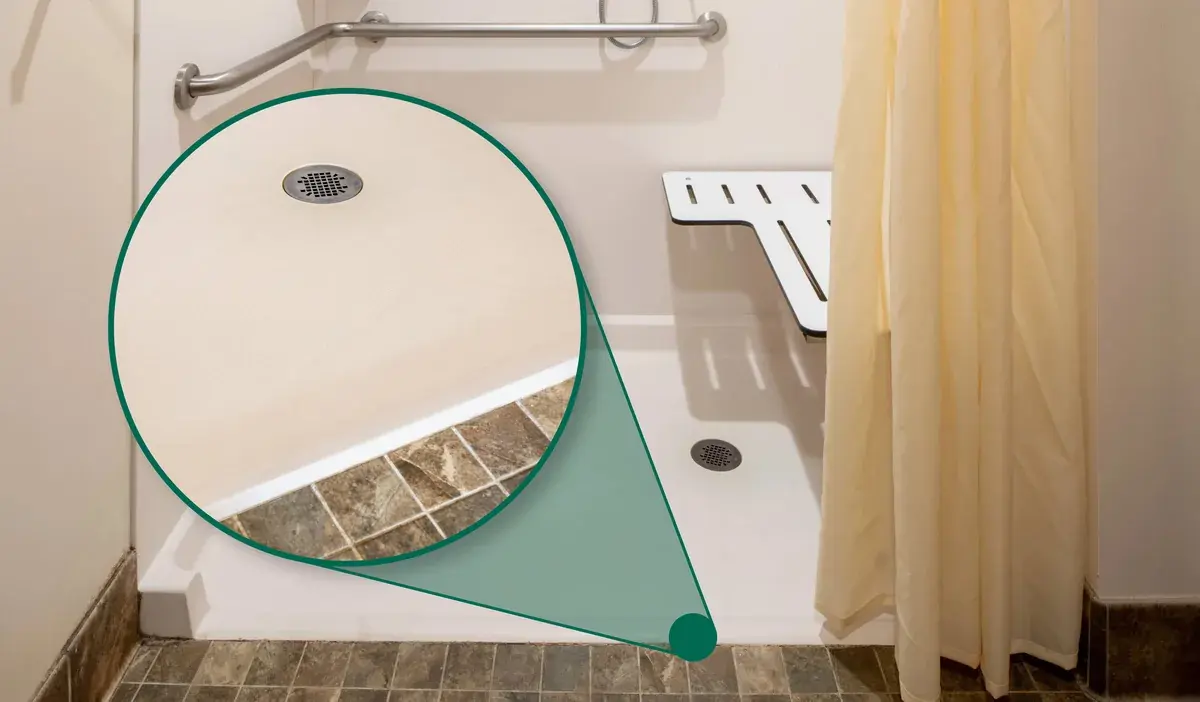
Solid surface showers provide seamless, non-porous surfaces that resist moisture and staining. Without grout lines to maintain, cleaning becomes faster and more consistent.
Integrated Components and Custom Fit
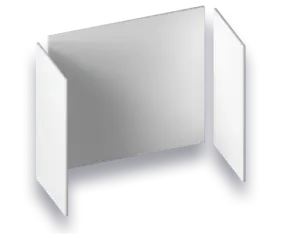
Solid surface shower systems can be fabricated with integrated panels, benches and accessories that reduce seams. The resulting products have fewer failure points, improving durability and long-term performance.
Toilet Partitions
Solid surface toilet partitions resist dents, corrosion and graffiti while maintaining a consistent appearance across high-traffic campus facilities. If damaged, solid surface partitions can often be repaired on site, reducing replacement costs and minimizing restroom downtime.
Short-Term Cost vs. Long-Term Value
While solid surface may carry a higher upfront cost than some traditional options, its durability and repairability often result in lower lifecycle costs. Reduced maintenance labor, fewer repairs and longer service life help universities better manage budgets over time.
Meridian Solid Surface® manufactured by Tower Industries is designed to meet the performance expectations of institutional environments and support long-term facility planning. To learn more about how Meridian Solid Surface® can elevate your university bathrooms, contact Tower Industries.
Comments